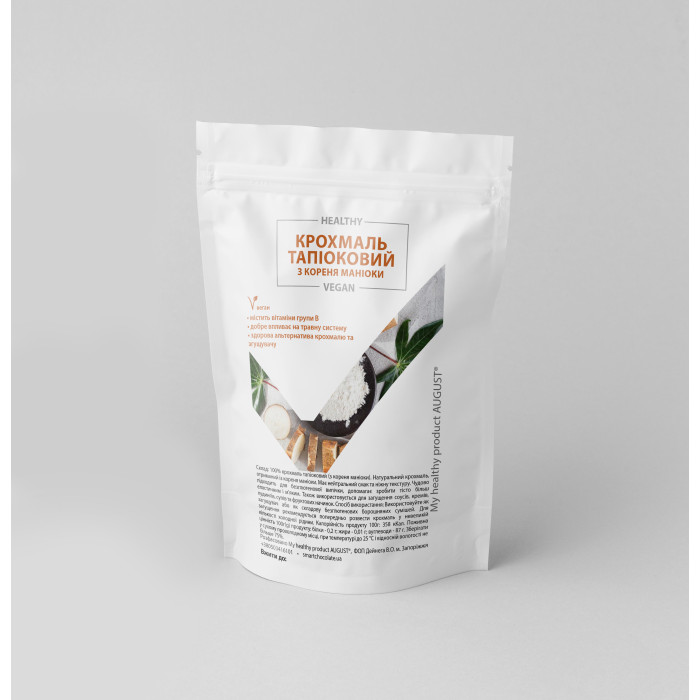
Tapioca flour (or tapioca starch) is a powder obtained from the starchy juice of the cassava root. It is often used in Asian, South American and gluten-free cuisines.
Benefits:
Gluten-free
Great for people with celiac disease and gluten sensitivity.
Easy digestion
Virtually allergen-free, well-digested, suitable for children and people with sensitive GI tracts.
Source of carbohydrates (fast energy)
Particularly useful when recovering from illness or during vigorous exercise.
Low in sodium and fat
Ideal for salt and fat controlled diets.
Neutral flavour
Does not affect the taste of dishes, combines well with different foods.
How to use tapioca flour:
In baking (as a binder):
Replaces some of the wheat flour in gluten-free recipes.
Improves texture - makes baked goods elastic and moist.
Example: breads, muffins, pancakes, scones, brownies.
As a thickener:
Excellent for thickening sauces, soups, sours, desserts.
It does not give an aftertaste and gives a silky texture.
In frying and breading:
Creates a crispy crust, especially when deep frying (alternative to starch or flour).
In dietary and vegan diets:
Helps bind ingredients without the use of eggs or gluten.
Features:
Almost vitamin and protein free - it is best combined with other flours (almond flour, rice flour, etc.).
Thickens quickly - dose a little at a time (most commonly 1-2 tsp per glass of liquid)
Should not be consumed in excess if you have diabetes - it is a fast carbohydrate
Nutritional value per 100g: 358 kcal, protein - 0.2g, fat - 0.01, carbohydrates - 87g